A clean, healthy swimming pool depends on more than balanced water chemistry. Behind every sparkling pool is a filtration system working around the clock to remove dirt, debris, and contaminants. Understanding the different types of pool filters can help pool owners make informed decisions about maintenance, repairs, and equipment upgrades.
Whether you’re building a new pool, replacing aging equipment, or simply learning more about swimming pool care, knowing how pool filtration systems work is an important part of protecting water quality and extending the life of your pool.
 What Is a Pool Filtration System and Why Is It Important?
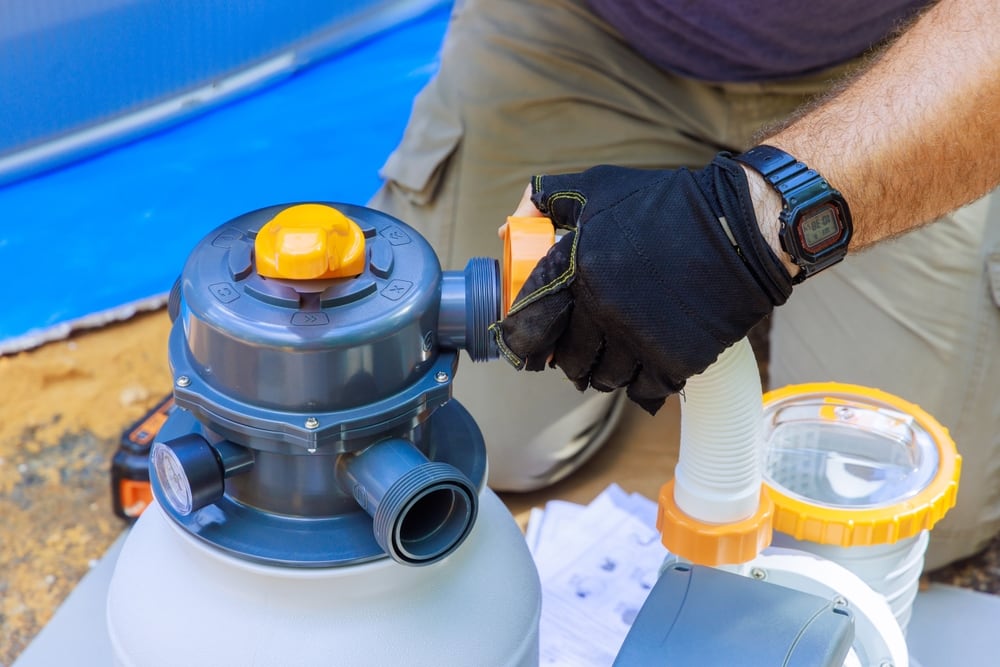
A pool filtration system is designed to circulate water through a filter that captures debris, contaminants, and microscopic particles. As water moves through the system, the filter removes unwanted materials before returning clean water to the pool.
Without effective filtration, dirt, leaves, algae spores, oils, and other contaminants can quickly build up in the water. This can lead to cloudy conditions, increased chemical usage, and potential health concerns for swimmers.
Proper filtration supports:
- Clear, inviting water
- Better chemical efficiency
- Reduced algae growth
- Improved swimmer safety
- Longer equipment lifespan
- Lower maintenance costs over time
While all pool filtration systems serve the same purpose, there are several types of pool filters available, each with its own advantages and maintenance requirements. The three most common options are sand filters, cartridge filters, and diatomaceous earth (DE) filters.
Sand Filters: Functionality, Pros, and Cons
Sand filters have been a popular choice for decades due to their reliability and straightforward operation.
A sand filter uses specially graded filter sand housed inside a tank. As pool water passes through the sand bed, debris and contaminants become trapped between the sand particles. Clean water then flows back into the pool.
Over time, the trapped debris accumulates and reduces water flow. When this occurs, the filter must be backwashed to remove the buildup and restore performance.
Advantages of Sand Filters
Sand filters offer several benefits for pool owners:
- Lower upfront equipment costs
- Simple operation
- Durable construction
- Less frequent cleaning requirements
- Widely available replacement parts
Sand filters are often recommended for pool owners who want a low-maintenance filtration solution.
Drawbacks of Sand Filters
Despite their popularity, sand filters have some limitations.
- They typically capture larger particles than other filter types.
- Backwashing uses additional water.
- Sand eventually requires replacement.
- Water clarity may not be as refined as with cartridge or DE filters.
Are Sand Filters Suitable for All Pools?
Sand filters can work well for many residential pools and some commercial applications. However, pool owners seeking the highest level of filtration may want to consider alternative options.
Cartridge Filters: Features and Maintenance
Cartridge filters have become increasingly popular because they offer excellent filtration without requiring backwashing.
A cartridge filter contains a pleated filtering element that captures dirt and debris as water flows through it. The pleated design creates a large surface area, allowing the filter to trap smaller particles while maintaining strong water circulation.
Water enters the filter tank and passes through the cartridge media. As contaminants collect on the cartridge surface, clean water continues through the system and returns to the pool.
The large filtering area helps reduce resistance, allowing many systems to operate efficiently.
Maintenance Requirements
Proper cartridge filter maintenance is essential for optimal performance.
Typical maintenance includes:
- Removing the cartridge for cleaning
- Rinsing accumulated debris with a hose
- Performing deep cleanings periodically
- Inspecting for tears or damage
- Replacing cartridges when needed
Most cartridges require replacement every few years, though lifespan varies depending on usage and maintenance habits.
Cartridge Filters vs. Sand Filters
Compared to sand filters, cartridge filters often provide:
- Better filtration quality
- Lower water consumption
- No backwashing requirements
- Easier water conservation
However, cartridge replacements can be more expensive than replacing filter sand, and cleaning may need to be performed more frequently.
Diatomaceous Earth (DE) Filters: Efficiency and Care
Many pool professionals consider DE filters the gold standard of pool filtration.
What Makes DE Filters Unique?
Diatomaceous earth filters use a powder made from fossilized microscopic aquatic organisms known as diatoms. The powder coats internal filter grids and creates an extremely fine filtering surface.
As water passes through the grids, tiny particles become trapped in the DE coating.
Filtration Performance
DE filters are known for providing exceptional water clarity.
Compared to other types of pool filters, DE systems can often remove the smallest particles, helping create crystal-clear water that many pool owners appreciate.
Benefits of DE Filters
Advantages include:
- Superior filtration performance
- Exceptional water clarity
- Efficient removal of fine debris
- Reduced suspended particles
Maintenance Considerations
While DE filters provide excellent results, they also require more involved maintenance.
Pool owners should expect:
- Regular backwashing
- Reapplication of DE powder
- Periodic grid cleaning
- More complex servicing procedures
Because DE powder must be handled properly, some owners prefer to have professional technicians manage maintenance and repairs.
Potential Drawbacks
DE filters may involve:
- Higher equipment costs
- More maintenance requirements
- Increased complexity
- Additional operating expenses
Energy Efficiency and Environmental Considerations
Energy efficiency has become an increasingly important factor when evaluating pool equipment.
Which Pool Filters Are Most Energy-Efficient?
Efficiency depends on several factors, including pump size, plumbing design, maintenance practices, and filter condition.
Generally:
- Cartridge filters often require less pumping pressure.
- Sand filters may require additional water and energy during backwashing.
- DE filters can provide excellent filtration but may require more maintenance-related energy use.
Tips for Reducing Energy Consumption
Pool owners can improve efficiency by:
- Cleaning filters regularly
- Using variable-speed pool pumps
- Operating pumps during off-peak hours
- Repairing leaks promptly
- Maintaining proper water chemistry
- Replacing aging equipment when necessary
A clean filter allows water to flow more efficiently, reducing strain on the pump and lowering energy consumption.
Environmental Considerations
Many pool owners are interested in eco-friendly pool care practices.
Water conservation and reduced waste can often be achieved through:
- Choosing cartridge filtration systems
- Using energy-efficient pumps
- Maintaining equipment proactively
- Avoiding excessive backwashing
- Following manufacturer recommendations
Installation, Replacement, and Troubleshooting Tips
Proper installation and maintenance are essential regardless of the filter type selected.
Installing a Pool Filter
While installation procedures vary, the general process typically includes:
- Selecting the appropriate filter size.
- Positioning the equipment correctly.
- Connecting plumbing lines.
- Priming the system.
- Testing for leaks and proper operation.
Professional installation can help ensure optimal performance and prevent costly mistakes.
Common Pool Filter Problems
Pool owners may occasionally encounter issues such as:
High Pressure Readings
Possible causes include:
- Dirty filter media
- Blocked plumbing
- Restricted water flow
Low Pressure
Potential issues may involve:
- Pump problems
- Air leaks
- Clogged skimmer baskets
Poor Water Clarity
Cloudy water may result from:
- Insufficient filtration
- Worn filter media
- Improper chemical balance
- Circulation issues
Leaks Around Equipment
Leaks should be addressed quickly to prevent equipment damage and water loss.
When Should Filters Be Serviced or Replaced?
General replacement timelines include:
- Sand: Every several years depending on condition
- Cartridge: Every few years depending on usage
- DE grids: Replaced as needed based on wear
Routine inspections can help identify problems before they become costly repairs.
If you’re experiencing filtration issues, Pool Troopers offers expert pool filter help to diagnose problems and keep your equipment operating efficiently.
Cost Comparison and Lifespan of Pool Filters
Cost is often a major consideration when comparing pool filtration systems.
Sand Filter Costs
Sand filters typically have:
- Lower initial purchase costs
- Affordable replacement media
- Moderate maintenance expenses
Cartridge Filter Costs
Cartridge filters generally involve:
- Moderate equipment costs
- Periodic cartridge replacement
- Reduced water consumption expenses
DE Filter Costs
DE filters often represent:
- Higher upfront investment
- Ongoing DE powder costs
- Increased maintenance requirements
Expected Lifespans
The lifespan of any filter depends on maintenance, water chemistry, environmental conditions, and usage levels.
Which Filter Offers the Best Long-Term Value?
The answer depends on individual priorities.
- Budget-conscious owners may prefer sand filters.
- Water-conscious owners often appreciate cartridge filters.
- Owners focused on maximum water clarity may choose DE filters.
The best value comes from balancing equipment costs, maintenance requirements, and filtration performance.
How to Choose the Right Pool Filter for Your Pool
Selecting the right filter requires evaluating several factors.
Consider Pool Size
Larger pools often require more robust filtration systems to handle higher water volumes and increased circulation demands.
Evaluate Pool Usage
Pools that experience heavy use may benefit from enhanced filtration performance and more frequent maintenance schedules.
Consider Water Type
Saltwater pools can operate successfully with various filtration systems. Many pool owners pair cartridge filters with saltwater systems because of their efficiency and reduced water waste.
Above-Ground vs. In-Ground Pools
Both above-ground and in-ground pools can utilize different types of pool filters, but equipment sizing and plumbing configurations may vary.
Think About Maintenance Preferences
Some pool owners prefer a system that requires minimal attention, while others prioritize maximum water clarity regardless of maintenance requirements.
Work With Experienced Professionals
A professional pool service company can evaluate your pool’s unique needs and recommend equipment that aligns with your budget, usage patterns, and long-term goals.
Keep Your Pool Filter Working Its Best
Understanding the different types of pool filters is an important step toward maintaining cleaner, healthier water. Sand, cartridge, and DE filters each offer unique benefits, and the right choice depends on your pool’s size, usage, maintenance preferences, and budget.
At Pool Troopers, we’ve helped pool owners enjoy sparkling, swim-ready water for decades. Whether you need routine maintenance, equipment repairs, filter cleaning, or expert guidance on pool filtration systems, our team is here to help. We believe pool ownership should be simple, enjoyable, and stress-free, so you can spend more time making memories and less time worrying about maintenance.